

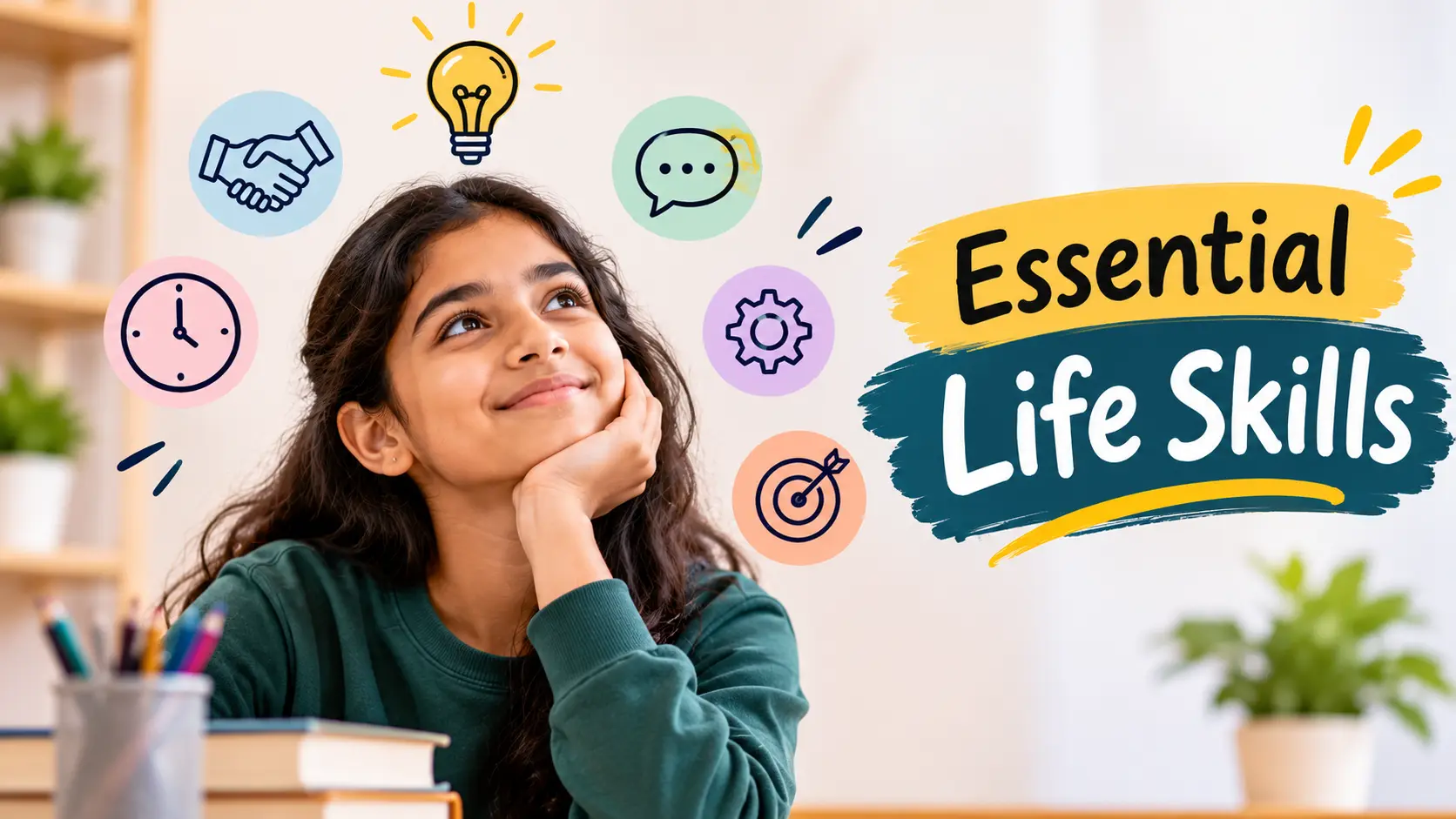
Academic knowledge is important, but children also need practical abilities to manage everyday situations, build relationships and make responsible decisions. These abilities are known as life skills, and they play an important role in a student's overall development.
From communicating confidently and managing time to solving problems and working with others, life skills help students become more independent and prepared for the future. These skills are developed through everyday experiences at home, in school and in the community.
In this blog, we explore 10 essential life skills for students, why they matter and how parents and schools can help children develop them.
What Are Life Skills for Students?
Life skills are the practical abilities and behaviours that help individuals handle everyday challenges effectively. For students, these skills support learning, communication, decision-making and personal growth.
They are not limited to classroom lessons or textbooks. Students develop life skills through activities such as participating in group projects, managing daily routines, solving problems, interacting with others and taking responsibility for their actions.
Developing these abilities early can help children become confident, responsible and adaptable as they move through different stages of life.
10 Essential Life Skills Every Student Should Develop
Every child develops at a different pace, but there are certain abilities that can support their growth at every stage. Here are 10 important life skills students should gradually learn and practise.
1. Communication Skills
Communication helps students express their thoughts, share ideas and understand others. It includes speaking clearly, listening carefully, asking questions and communicating respectfully.
Students can develop communication skills by:
- Participating in classroom discussions and group activities.
- Sharing their thoughts and opinions confidently.
- Listening when others are speaking.
- Practising public speaking through presentations and storytelling.
Good communication helps students build relationships, work with others and express themselves in different situations.
2. Critical Thinking and Problem-Solving
Students face different challenges in their academic and personal lives. Critical thinking helps them understand situations, consider different possibilities and make informed decisions.
Students can improve these skills by:
- Asking questions and exploring different ideas.
- Solving puzzles, brain teasers and practical problems.
- Comparing information before reaching conclusions.
- Learning from mistakes instead of giving up.
These abilities encourage curiosity and help children approach challenges with confidence.
3. Time Management
Time management helps students organise their daily activities and complete responsibilities on time. It allows them to balance schoolwork, hobbies, physical activities and rest.
Some simple ways to build time management skills include:
- Creating a daily or weekly study timetable.
- Breaking larger tasks into smaller steps.
- Prioritising important activities.
- Avoiding unnecessary distractions while studying.
- Keeping enough time for breaks and recreation.
Learning to manage time early can help students become more organised and independent.
4. Emotional Intelligence
Emotional intelligence is the ability to recognise, understand and manage emotions while being aware of how others feel. It helps students respond to different situations with patience and empathy.
Students can develop emotional intelligence by:
- Learning to identify and express their feelings.
- Understanding and respecting other people's emotions.
- Practising patience when facing difficult situations.
- Talking to trusted adults when they need support.
These abilities can help children build healthy relationships and manage disagreements more effectively.
5. Teamwork and Collaboration
Teamwork teaches students how to work towards a shared goal while respecting different opinions and abilities. It also helps them understand the importance of cooperation and shared responsibility.
Students can practise teamwork through:
- Participating in group projects and classroom activities.
- Playing team sports and cooperative games.
- Sharing responsibilities during group tasks.
- Respecting different ideas and supporting team members.
Working with others helps students develop cooperation, patience and interpersonal skills.
6. Decision-Making and Responsibility
As children grow, they need to learn how to make choices and understand the consequences of their actions. Decision-making helps students evaluate options, think ahead and take responsibility for their choices.
Parents and teachers can encourage this skill by:
- Allowing children to make age-appropriate decisions.
- Discussing the possible outcomes of different choices.
- Giving students responsibilities at home and school.
- Encouraging them to learn from their mistakes.
These experiences help children become more confident and accountable.
7. Adaptability and Resilience
Life does not always go according to plan. Adaptability helps students adjust to new situations, while resilience helps them recover from setbacks and continue trying.
Students can strengthen these abilities by:
- Trying new activities and learning unfamiliar skills.
- Accepting feedback and using it to improve.
- Understanding that mistakes are part of learning.
- Approaching challenges with a positive and flexible mindset.
These qualities help students handle change and face challenges without losing confidence.
8. Financial Awareness
Financial awareness helps students understand the value of money and develop responsible spending habits. Basic financial knowledge can prepare children to make thoughtful decisions as they grow older.
Students can learn financial awareness by:
- Understanding the difference between needs and wants.
- Saving a portion of their pocket money.
- Learning basic budgeting through small activities.
- Understanding the importance of spending responsibly.
These everyday lessons can help students develop healthy financial habits.
9. Digital Literacy and Online Safety
Students increasingly depend on digital devices for learning, communication and entertainment. Digital literacy helps them use technology effectively, evaluate online information and recognise potential risks.
Students should learn to:
- Identify reliable online information.
- Protect passwords and personal details.
- Recognise suspicious links and online scams.
- Communicate responsibly on digital platforms.
- Maintain a healthy balance between screen time and offline activities.
Parents and schools should work together to help children develop safe and responsible digital habits.
10. Health and Self-Care
Taking care of physical and mental well-being is another essential life skill. Students should understand the importance of maintaining healthy routines and recognising when they need rest or support.
They can develop self-care habits by:
- Following regular sleep schedules.
- Eating nutritious meals and staying hydrated.
- Participating in sports and physical activities.
- Maintaining personal hygiene.
- Taking breaks and talking to trusted adults when feeling overwhelmed.
Learning to look after themselves helps students become more responsible for their overall well-being.
How Students Can Develop Life Skills at School and Home
Life skills are not learned through lessons alone. Students develop them through everyday experiences, responsibilities and interactions with others. Both parents and teachers can create opportunities for children to practise these skills as they grow.
At Home, Parents Can
- Encourage children to make small decisions, such as planning their daily activities.
- Assign age-appropriate responsibilities like organising their school bags or helping with household tasks.
- Involve them in simple activities such as shopping, budgeting and planning family outings.
- Encourage open conversations so children feel comfortable sharing their thoughts and feelings. Parents can also explore these positive parenting communication tips.
At School, Teachers Can
- Organise group projects, debates and presentations to improve communication and teamwork.
- Introduce practical activities that encourage critical thinking and problem-solving.
- Provide opportunities to participate in sports, arts, competitions and school events.
- Encourage students to take leadership roles and make independent decisions.
The skills students need also change as they grow. Here is how parents and schools can focus on different abilities at each stage.
| Age Group | Skills to Focus On |
|---|---|
| Early primary | Sharing, listening and basic self-care |
| Upper primary | Responsibility, teamwork and simple planning |
| Middle school | Time management, communication and digital safety |
| Secondary | Decision-making, resilience and financial awareness |
Giving children opportunities to practise these skills at every stage helps them gradually become more independent and responsible.
How Schools Play a Role in Developing Essential Life Skills
Schools provide children with opportunities to learn, interact and handle situations beyond their regular academic lessons. The classroom, playground, laboratories and extracurricular activities can all contribute to developing essential life skills.
Here are some ways schools can support this development:
- Activity-based learning: Experiments, projects and hands-on activities encourage students to think independently, explore ideas and solve problems.
- Sports and extracurricular activities: Sports, music, dance and arts help children develop discipline, teamwork, confidence and creativity.
- Classroom participation: Discussions, presentations and debates give students opportunities to express their opinions and listen to others.
- Leadership opportunities: Student councils, group activities and school events teach children responsibility, decision-making and collaboration.
- Technology-based learning: Guided exposure to digital tools helps students develop digital literacy and understand responsible technology use.
For instance, Scholars World School, Badangpet, provides opportunities for students to explore activities such as physical education, creative arts, computer science and communication skills training. Such experiences can support their academic learning as well as their personal development. Learn more about the Scholars approach to holistic development.
A school environment that encourages curiosity, participation and practical learning helps students apply what they learn to everyday situations.
Preparing Students for Life Beyond the Classroom
Academic achievements are important, but students also need the confidence and practical abilities to handle responsibilities outside school. Whether they move on to higher education, enter the workplace or manage everyday decisions, life skills will continue to play an important role.
Parents and schools should work together to make these skills part of a child's everyday learning experience. Small opportunities to communicate, collaborate, make decisions and take responsibility can create lasting habits.
At Scholars World School, Badangpet, a balanced approach to academics and extracurricular learning can help children explore their interests, build confidence and develop essential abilities for the future. Families can explore the academic approach at Scholars to learn more.
The goal is not just to help students perform well in examinations but to prepare them to think independently, adapt to change and approach life's challenges with confidence.
Conclusion
Life skills help students handle everyday responsibilities, communicate with others and make thoughtful decisions. Skills such as problem-solving, time management, teamwork and emotional intelligence develop through regular practice at home and school.
Parents and teachers can support this growth by giving children opportunities to make decisions, take responsibility and learn from experience. With consistent guidance and a supportive learning environment, students can become more independent, confident and prepared for life beyond the classroom.
Frequently Asked Questions
1. What are the most important life skills for students?
Some of the most important life skills for students include communication, critical thinking, problem-solving, time management, emotional intelligence, teamwork, adaptability, financial awareness, digital literacy and self-care. These skills help students manage everyday responsibilities and prepare for future challenges.
2. Why are life skills important for school students?
Life skills help school students become more independent, confident and responsible. They improve decision-making, strengthen relationships and teach children how to handle challenges. These abilities also prepare students for higher education, future careers and everyday situations.
3. How can students develop life skills?
Students can develop life skills through regular practice at school and home. Participating in group projects, sports, classroom discussions and extracurricular activities helps them improve communication, teamwork and problem-solving. Taking responsibility for everyday tasks also encourages independence.
4. What life skills should a child learn at school?
Children should learn communication, teamwork, critical thinking, problem-solving, time management, emotional intelligence and digital literacy at school. They should also get opportunities to practise decision-making, leadership and adaptability through classroom activities and practical experiences.
5. How can parents teach life skills at home?
Parents can teach life skills by involving children in everyday responsibilities. Simple activities such as organising their school bags, managing pocket money, planning daily schedules and helping with household tasks encourage independence. Open conversations also help children develop communication and emotional awareness.
6. What is the difference between life skills and soft skills?
Life skills are practical abilities that help people manage everyday situations, while soft skills focus mainly on interpersonal qualities and workplace interactions. For example, budgeting, decision-making and personal hygiene are life skills, whereas communication, teamwork, leadership and adaptability are commonly considered soft skills. However, the two categories overlap, as many soft skills are also essential life skills.